Sunday, 10 May 2009

EMI present essay

In recent years, EMI has been faced with many challenges.

There have been many big events that have changed EMI in recent years, such as buying Virgin music group and being bought by Terra Firma.

Also EMI’s popularity has increased a lot due to famous artists being signed, and the

Growth of the company has not stopped.

The 90’s proved to be a good decade for EMI.

It was in the early 90’s that EMI bought Virgin music group, who at the time were the largest independent music company in the world, whose roster included bands such as Smashing Pumpkins, Massive Attack, The rolling Stones and Janet Jackson.

EMI had started the decade with a positive outlook, and they were ready for anything.

Another great achievement of the 90’s was the signing of Robbie Williams and The Spice Girls.

These two artists were the two most popular artists of the 90’s, and as a result, EMI gained a large amount of popularity from it.

The Spice Girls formed in 1994, signed to Virgin records in 1995 and released their first single in 1996.

The Spice Girls completely changed pop music and girl groups in particular.

Robbie Williams joined EMI in 1996 and his first album came out in 1997.

The 90’s was also the time in which digital music was first introduced.

This was a big step forward in technology, and EMI was well placed to capitalise on the trend.

EMI started up their first websites in 1993 and 1994. This was a very important step because of how the internet was becoming more and more popular, and by making a website EMI would become more popular.

4 years after the website was created, EMI streamed the first complete album over the internet, which was Mezzanine by Massive Attack.

In the years that followed, EMI succeeded in accomplishing many other important digital advances such as being the first company to release a digital album download, launching the first internet video single, and being the first major music company to make new music available digitally to consumers at the same time as it is serviced to radio stations.

After this in 2007, EMI became the first major music company to make it’s music available without digital rights management (DRM) software and at much higher sound quality.

In 2007, EMI was acquired by the private equity firm Terra Firma.

Terra Firma bought EMI for £3.2 billion after a dramatic decline in sales and the announcement that EMI had sustained a loss of £260 million in 2006/2007.

At the same time, EMI’s British market share dropped from 16% to 9%.

After this happened, several important artists walked away from EMI, including Radiohead.

Paul McCartney left ahead of the Terra Firma takeover, and The Rolling Stones signed a one-album deal with Universal which expired on February 2008.

Overall I think that EMI has been very successful in keeping up with the newest technologies and keeping on top of the competition.

Even though EMI has recently had a big money loss, I think that it will still continue to be one of the biggest and most popular music companies and labels, and that it will keep progressing and achieving great things.

Tuesday, 5 May 2009

Evaluation

1. In what ways does your media product use, develop or challenge forms and conventions of real media products?

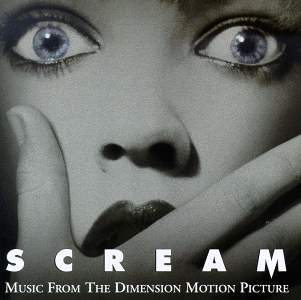
My two minute opening uses forms and conventions from the Horror movie ‘Scream’, and this film influenced me to make my media product using similar forms and conventions.
The horror in Scream is obvious to the audience; you get to see the murder taking place, the actual stabbing.
In my film, I did not use special effects or gore to scare the audience; I decided to build up a scary atmosphere instead, as I did not have access to special effects.
I used similar forms and conventions to Scream, such as having a Killer dressed in black who uses a knife to murder his victims, and having the victim be all alone without any witnesses to make the audience feel like they are the only witness.
The attacker in my film was based on the attacker in Scream, as I chose clothes that were black to make the audience automatically know that he was the bad guy.
I also had a piece of black cloth to cover over the attackers face so that you could not tell who or what he was, which left it up to the imagination of the audience.

2. How does your media product represent particular social groups?

I have tried to portray the victim in my film as being a young, everyday person. In Scream the victim fits into this category as well.
The clothes that I wanted the character to be dressed in were jeans, a T-shirt and a jacket, as this is what I think of as being casual dress.
I thought that by dressing my character like this would make the audience think that if an ordinary person could get attacked like this, it could happen to anybody, which is what made it scarier.
The attacker in my film was based on the attacker in Scream, as I chose clothes that were black to make the audience automatically know that he was the bad guy.
I also had a piece of black cloth to cover over the attackers face so that you could not tell who or what he was, which left it up to the imagination of the audience.

3. What kind of media institution might distribute your media product and why?

The media institution that I would choose to distribute my film would be Dimension films which are a subsidiary of Miramax films, as they are the company who distributed Scream.
I think that this would be a good company to use as it distributes many films similar to mine such as Halloween, Hellraiser, and the Amityville horror.

4. Who would be the audience for your media product?

The classification for my film would be 15, because it contains strong violence and moderate horror.
This means that anyone below the age of 15 will not be able to view my film in a cinema, or would be able to rent or buy it on DVD.

5. How did you attract/address your audience?

To attract the audience and keep them interested in my film, I thought that it was important to make it build up from the start until the end when the attacker kills the victim.
I decided to start the background music off quietly, and make sure that there was light behind the victim as he walks into the graveyard to symbolise the fact that he is walking into a dark place.
I made the atmosphere build up, with the background sounds getting louder, and making the killer get closer to the victim.
I made the atmosphere build up to one point at the end of the film where the victim gets stabbed by the attacker.
This keeps the audience attracted because they want to find out what happens in the end.

6. What have you learnt about technologies from the process of constructing the product?

During the process of constructing my media product, I have learnt a lot about how editing software works and how to put a video onto a disc.
I have also learnt how to use the Apple Mac computers, as I had never used one before.
I learnt how to add effects to my film and how to upload music to it.
Also I have learnt how to add a menu to a DVD to make it more professional.
When I did my filming, I learnt how to use a camera much more effectively,
And I learnt how to attach it to a computer and upload clips.
Also I had never used a tripod with a camera before, so it took a while to get used to.

7. Looking back to your preliminary task, what do you feel that you have learnt in the progression from it to the full product?

My first task was very simple; I didn’t have to worry about Mise en scene.
My main task was far more complex.
I managed to get my filming done in one day, so continuity was not an issue.
For my first task I didn’t have to worry about location, but when it came to my second Artefact, I had to plan where I wanted to film, and how it would represent the horror genre.
When I did my first Artefact, the camerawork was very basic, as I did not know many different shots and angles, but when I did my second artefact I used a much wider array of camera techniques.
For the first artefact we did not have to think about codes and conventions, because we were not trying to portray a certain genre, but when doing the second artefact, I had to think about costumes, props, location, different shots and sound.
I had to make sure that my film depicted the horror genre through the Mise en scene.

I have also learnt how to make a film more interesting and more professional by adding more scenes and different camera angles instead of just having the camera follow someone everywhere.

Also I have used sound effects and video effects effectively in my second artefact whereas I did not in my first artefact.
I used sound effects that built tension, as it would help build the tension in my film up until the end. I also used a heart beat sound effect make it seem like it was the persons heart beat in my film, showing that he was scared.
I used video effects to and sound effects together to create the effect of lighting flashing on the screen during my film.

Overall, I feel that I have learnt a great amount of things during the time after filming my first artefact.
I feel that I have learnt many new techniques and ways of doing things, such as different camera angles and how to add effects using a computer.
Also with this experience I can perform these tasks with more ease, and be able to do them quicker than before, such as being able to film scenes quicker as I know exactly how to set up for filming and what everyone should be doing.

Thursday, 2 April 2009

EMI present essay

In recent years, EMI has been faced with many challenges.

There have been many big events that have changed EMI in recent years, such as buying Virgin music group and being bought by Terra Firma.

Also EMI’s popularity has increased a lot due to famous artists being signed, and the

Growth of the company has not stopped.

The 90’s proved to be a good decade for EMI.

It was in the early 90’s that EMI bought Virgin music group, who at the time were the largest independent music company in the world, whose roster included bands such as Smashing Pumpkins, Massive Attack, The rolling Stones and Janet Jackson.

EMI had started the decade with a positive outlook, and they were ready for anything.

Another great achievement of the 90’s was the signing of Robbie Williams and The Spice Girls.

These two artists were the two most popular artists of the 90’s, and as a result, EMI gained a large amount of popularity from it.

The Spice Girls formed in 1994, signed to Virgin records in 1995 and released their first single in 1996.

The Spice Girls completely changed pop music and girl groups in particular.

Robbie Williams joined EMI in 1996 and his first album came out in 1997.

The 90’s was also the time in which digital music was first introduced.

This was a big step forward in technology, and EMI was well placed to capitalise on the trend.

EMI started up their first websites in 1993 and 1994. This was a very important step because of how the internet was becoming more and more popular, and by making a website EMI would become more popular.

4 years after the website was created, EMI streamed the first complete album over the internet, which was Mezzanine by Massive Attack.

In the years that followed, EMI succeeded in accomplishing many other important digital advances such as being the first company to release a digital album download, launching the first internet video single, and being the first major music company to make new music available digitally to consumers at the same time as it is serviced to radio stations.

After this in 2007, EMI became the first major music company to make it’s music available without digital rights management (DRM) software and at much higher sound quality.

In 2007, EMI was acquired by the private equity firm Terra Firma.

Terra Firma bought EMI for £3.2 billion after a dramatic decline in sales and the announcement that EMI had sustained a loss of £260 million in 2006/2007.

At the same time, EMI’s British market share dropped from 16% to 9%.

After this happened, several important artists walked away from EMI, including Radiohead.

Paul McCartney left ahead of the Terra Firma takeover, and The Rolling Stones signed a one-album deal with Universal which expired on February 2008.

Overall I think that EMI has been very successful in keeping up with the newest technologies and keeping on top of the competition.

Even though EMI has recently had a big money loss, I think that it will still continue to be one of the biggest and most popular music companies and labels, and that it will keep progressing and achieving great things.

Monday, 23 March 2009

How is the Sci-fi drama conveyed through Dr Who?

Sci-fi dramas are usually full of special effects, CGI (Computer generated images) and

atmospheric sounds and music, and all of these are used in Dr Who to make it convey the sci-fi genre. The four points that do this are Camera, Editing, Sound and Mise en Scene.


Camera:
How the camera is set up and where the camera is placed is essential in creating the right atmosphere.
In Dr who there is a wide range of different shots that are used, such as the over-the-shoulder shot when a conversation is taking place, and close up shots to show emotion in characters.
As Dr who is a drama, there is a considerable amount of dialogue and different emotional moments, and the camera work is the key to making these moments really make an effect.
One example of this is in Dr who is when the camera shows a view of the big dining room from a birds eye view to portray class.

Editing:
In sci-fi movies, editing is essential, as this is how computer animation is added.
In Dr who, the titanic flying through space is computer animated, as it would be impossible to film in real life.
Also, editing is used to add some off the special effects that happen such as explosions, and generally anything that would be impossible to do for real.
As sci-fi dramas can usually contain a lot of action, editing is used to create fast transitions to show speed and the effect of the characters panicing.

Sound:
Sound is also a big part of portraying a sci-fi.
Sounds are used to get maximum impact from things such as explosions, so that it sounds realistic. Also background music is very important, as certain sounds can portray different environments, such as spaceships or different planets.
In Dr who, the background music sets the scene in the titanic, as christmas music is playing to create a christmas atmosphere, and the music is also upper class, and so also portrays the titanic as being an upper class cruise.

Mise en scene:
The mise en scene for a sci-fi drama has to be accurate to make it work well, and Dr who does this with extreme accuracy.
In the titanic, everybody is dressed up in very smart clothes; men being dressed in suits and women being dressed in bright dresses.
This portrays the image of class within the titanic, and also sets the scene.
The robots also portray the image of the future, which is a very commonly used thing in sci-fi.
Also the fog horn on the titanic when it crashes into the 'TARDIS' portrays to the audience that it is the titanic even before they see it.
When the camera shows outside of the titanic into space, this tells the audience that this is a sci-fi program.

These four points together are used by Dr who to create the atmosphere of a sci-fi drama, and is used to great effect.